
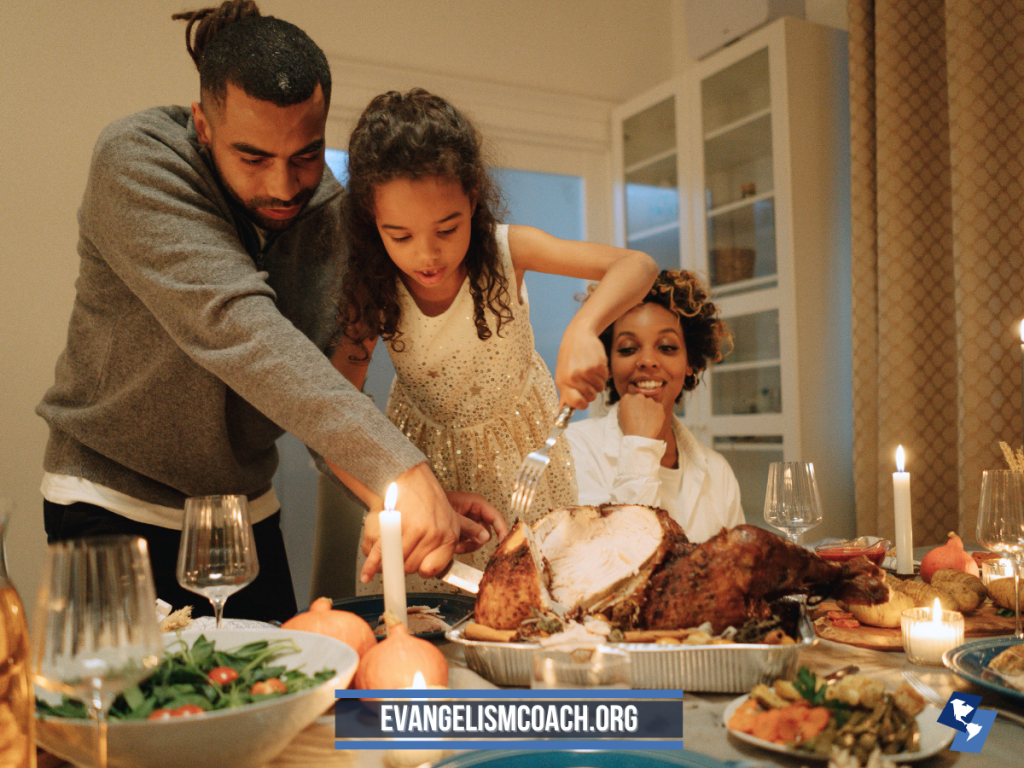
Thanksgiving is woven into American life as a time to pause and give thanks to God for His provision. Even outside the United States, many international churches and ministries mark the occasion with meals of gratitude. When we lived in Panama, our congregation gathered on a nearby weekend to share a Thanksgiving dinner and explain the meaning behind this American custom. Thanksgiving Thursday was a workday, not a holiday.
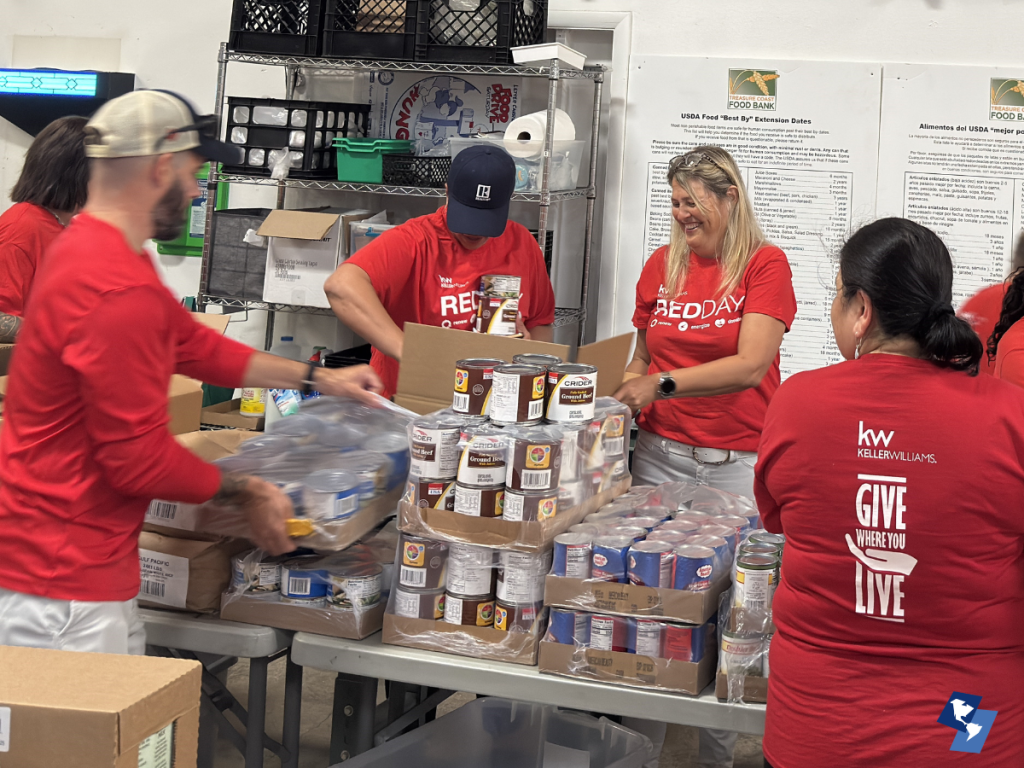
Beyond family tables, Thanksgiving also opens doors for servant evangelism and gospel conversations. Churches across the country use the season to serve their communities—organizing food drives, offering water stations at local Turkey Trots, or hosting community meals. Some believers open their homes to international students or neighbors who have nowhere to go, creating a welcoming table where gratitude and faith naturally meet.
These gatherings—whether around a table or out in the community—create natural contexts for spiritual conversation. They give us the chance to express gratitude to God while serving others and to share how thankfulness has shaped our walk with Christ. Look for moments to tell brief stories of what God has done in your life or how you’ve seen God’s faithfulness this year.
Personal evangelism often begins when we recognize those God-given moments where the Holy Spirit invites us to join the work God is already doing. It’s about asking thoughtful questions, listening for signs of spiritual thirst, and being ready to share your story when the time is right. Here are four ways to prepare your heart and conversations for Thanksgiving evangelism.
1. Pray Ahead of Time
Before the invitations are sent or the serving tables are set, begin your Thanksgiving evangelism with prayer.
Ask God to prepare both your heart and the hearts of those you’ll encounter, whether at a church food drive, a Turkey Trot water station, or a meal around your own table with family or invited guests.
Prayer sharpens your attention to what God is already doing. It shifts the focus from your words to God’s leading. Ask the Holy Spirit to make you sensitive to those gentle nudges that say, “Pay attention here.” Those are often the God-given kairos moments when spiritual conversations get going.
Read More: The Nudging of the Holy Spirit.
Pray specifically for opportunities to express gratitude for what Christ has done in your life. Ask God to bring spiritually curious people, people who might reveal what I call spiritual thirst. When you begin with prayer, you’ll notice conversational doors opening that might have gone unseen.
“Continue steadfastly in prayer, being watchful in it with thanksgiving.” (Colossians 4:2)
Start each day of Thanksgiving week with that mindset: watchful, thankful, and ready to participate in the conversations God prepares.

2. Brainstorm Some Possible Discussion Questions
Once you’ve prayed and prepared your heart, think ahead about ways to point a conversation toward gratitude and faith.
Thanksgiving gatherings, whether around a table, volunteering in the community, or serving coffee at a local outreach, naturally bring people together for relaxed conversation. With a little preparation, you can turn ordinary small talk into a potentially meaningful spiritual conversation.
As an ICF certified coach, I know that the fruit of simple questions often opens the deepest doors. When you ask with genuine curiosity, questions help you listen for what God is doing beneath the surface of someone’s story. Your questions may uncover where God is already working in their heart
Here are a few that can uncover spiritual curiosity without making anyone feel pressured:
- “What are you most thankful for this year?”
Gratitude creates an easy bridge to talk about how God provides or sustains us. - “How have you seen God’s goodness recently?”
This invites people to reflect on spiritual moments in everyday life. - “Has this been a difficult year to feel thankful? Why or why not?”
Honest answers to that question can reveal places where God’s comfort or hope might speak. - “If you could redesign Thanksgiving from scratch, what would matter most?”
Creative questions like this often reveal what a person values deeply.
The goal isn’t to control the conversation but to listen for clues of spiritual thirst—those subtle hints that someone is longing for meaning, peace, or forgiveness. Questions like these help surface that thirst so you can cooperate with the Spirit’s leading instead of forcing a direction.
If you’re serving through servant evangelism this Thanksgiving, these same questions work while handing out water at a race or helping pack meals at a food bank. Gratitude and curiosity often open hearts more effectively than quick answers or polished explanations.
For more ways to develop conversational skills in evangelism, explore these guides on using questions to start meaningful faith conversations:
3. Look and Listen for Spiritual Thirst
Every conversation carries hints of what’s happening in a person’s heart. As you serve or share a meal this Thanksgiving, stay alert for those moments when people talk about meaning, hope, or the challenges of life. These are often small clues of spiritual thirst—signs that someone may be open to hearing how God is at work.
Listening well is one of the most powerful acts of love. When you listen without rushing to fix or preach, you communicate that the person matters more than your message. This posture earns trust and lets the Holy Spirit guide the pace of the conversation.
Spiritual thirst can show up in many ways:
- A friend expresses gratitude but wonders aloud, “I’m not sure who I’m thanking.”
- A volunteer mentions feeling empty even after doing good deeds.
- Someone admits discouragement or guilt that gratitude can’t quite cover.
Each of these moments can become a divine invitation to share a story of God’s faithfulness, or simply to acknowledge that God meets us in those longings. You don’t have to have all the answers; you only need to notice where the Spirit is drawing attention and gently follow that lead.

When you’re attentive, everyday gratitude can grow into a gospel conversation. Listen prayerfully, ask good follow-up questions, and trust that God is already at work long before you speak.
Read: What Is Spiritual Thirst?
Read: Divine Appointments
4. Take the Time to Share
When you sense that a conversation has opened a door, don’t rush past it. Thanksgiving can be a busy week, but meaningful faith conversations often unfold in quiet, unplanned moments, such as washing dishes after a meal, packing boxes at the food bank, or chatting at the finish line of a community race. Be willing to pause and engage.
If someone’s words or questions hint at spiritual thirst, share a short story of how you’ve experienced God’s goodness. It doesn’t need to be dramatic or rehearsed; a simple “I’ve seen God provide for me in ways I couldn’t explain” can carry more weight than a full sermon. Stories of gratitude and faithfulness show how the gospel touches everyday life.
Tell the truth about what Christ has done for you and how thankfulness shapes your outlook. The goal is not to win an argument but to bear witness to God’s grace. Remember that people often remember your tone and warmth more than the exact words you used.
Sometimes these moments arrive naturally. Other times you may need to create space by asking, “Can I share something that’s been meaningful to me?” Either way, be sensitive to the Holy Spirit’s prompting and respond with gentleness. Those conversations are often the divine appointments you’ve been praying for.
As you serve, host, or visit this Thanksgiving, make room for gratitude and story. God may use your simple testimony to plant a seed that He will water long after the table is cleared.
Read: Video: Personal Evangelism Tip – Current Stories
Read: Divine Appointments
Coaching Tip: Better Evangelistic Conversations at Thanksgiving
Great gospel conversations often begin with gratitude, not arguments.
Pray for awareness, ask thoughtful questions, and listen for spiritual thirst.
When God opens a door, share a short story of what Christ has done for you with warmth and humility.
Better Evangelistic Conversations
Spiritual conversation is an art that you can learn. Over the years, I have learned to have more effective spiritual conversations with serious people searching for “something.”

I have learned and applied these four principles with great effectiveness in helping people discover Jesus.
- To watch for the nudge of the Holy Spirit
- To observe spiritual thirst
- To know where I am in their journey
- To help people take the next steps in their journey to Jesus.
You can learn these same principles and leave the formulas behind.
This Streaming or DVD set, Effective Conversations, is based on the encounter between Philip and the Ethiopian Eunuch. Recorded from a live seminar.
 Your First-Time Church Visitor Follow-up Letter
Leave a Reply